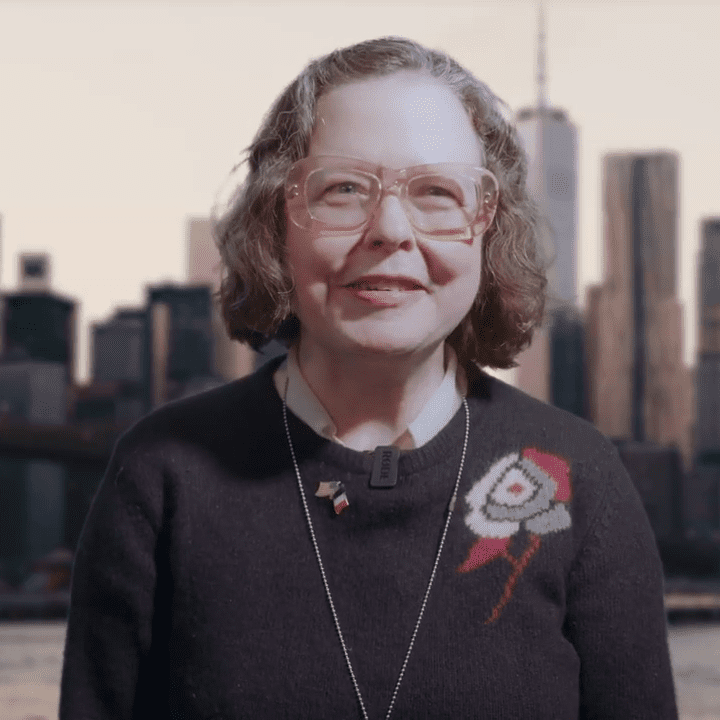
Nicole Francis: Connecting Clients with The Trust
Nicole Francis, a Certified Financial Planner and founder of the Hudson Advisory Group, discusses how The New York Community Trust…


We extend the range of services you offer.

Your client can create a fund with a variety of assets and estate planning tools on their own timeline and choose investment vehicles that meet their charitable objectives.

You'll have a trusted charitable partner to help them create powerful, enduring gifts in their names that honor their intent while adapting to contemporary challenges.

Your client receives the maximum income tax deduction allowed by law for charitable contributions, greater than the deduction to a private foundation for certain gifts.
Planning estates or taxes? Managing a windfall? Updating a will?
Our community foundation provides unparalleled options and benefits for your client’s planned giving. An outright bequest to The Trust—whether by will or revocable trust—is the simplest and most direct way for your client to establish a charitable legacy. Your client chooses a name for the fund, and we are happy to provide sample language that can be included in a will.
If a fund’s purpose is restricted, please review the final language with us to ensure that we can carry out your client’s wishes. Your client can also create a charitable remainder or lead trust through their estate.
Case Study: Turning Complex Assets Into a Meaningful Legacy
Once their children were grown and financially independent, Carol and David Martin revisited their estate plan. Over 40 years, they had built substantial assets—retirement accounts, investment properties, and an art collection.
They wanted to be remembered as philanthropists but were new to the world of nonprofits. Their advisor recommended The New York Community Trust to help them build a lasting charitable legacy through their estate plans. This charitable gift would be overseen and invested by professionals and used by high-impact nonprofits working on the issues the Martins care about.
Working with The Trust, the Martins created the Carol and David Martin Fund through their wills to support arts education, public parks, and hunger relief. By partnering with The Trust, they streamlined their estate, minimized tax burdens, and ensured their charitable goals would be fulfilled by expert grantmakers.
A charitable remainder trust (CRT) can be set up as an annuity trust or a unitrust with The Trust, offering significant tax benefits. Because the assets of a CRT are exempt from tax on the income earned by that trust, the proceeds are reinvested by the trustee and grow on a tax-free or tax-deferred basis.
The Trust is an ideal remainderman of a CRT. Donors can rely on our expertise in philanthropic administration and grantmaking as well as investment management.
Case Study: Balancing Income & Impact
After retiring, Evelyn wanted a steady income and a way to support the performing arts. Her appreciated stock posed a tax challenge—selling would trigger significant capital gains.
Her advisor recommended a charitable remainder trust (CRT) and introduced her to The New York Community Trust. By funding the CRT with stock, Evelyn avoided capital gains taxes, received an immediate deduction, and secured lifetime income. When the trust ends, the remainder will establish a named fund to expand access to dance, music, and theater in NYC.
Evelyn now enjoys financial security and the joy of knowing her legacy will inspire future generations through the arts.
A charitable lead trust (CLT) is generally used to transfer assets to the next generation with reduced or no tax, while also providing for charitable giving.
The CLT pays annual distributions to charity, either as an annuity or unitrust payment, for a period, then distributes the remainder to noncharitable beneficiaries selected by the donor (typically, your client’s children). It also offers your client the ability to participate in grantmaking.
The New York Community Trust is an ideal charitable beneficiary of a CLT’s annual distribution.
Case Study: Passing on Wealth & Giving Back Now with a CLT
With rising asset values and estate tax concerns, the Rosen family sought a way to transfer wealth efficiently. Their attorney recommended a charitable lead trust (CLT) and introduced them to The New York Community Trust.
They established a 20-year CLT, directing annual gifts to a family-named fund at The Trust focused on affordable housing and medical research. This reduced the taxable value of their estate while supporting innovative nonprofits shaping policy and advancing treatments.
The CLT not only preserved family wealth—it allowed the Rosens to see their philanthropy in action, benefiting causes tied to their business and personal experiences.
Gifts of appreciated securities offer important tax advantages. If these securities are held longer than 12 months (including mutual funds), the full fair market value is deductible as a charitable contribution (up to 30 percent of your client’s adjusted gross income for gifts to a public charity) without tax on the built-up capital gains.
Case Study: Turning Appreciated Stock into Impact
Angela, a tech executive, held highly appreciated stock after her company went public. To avoid capital gains taxes and support public education, she donated shares directly to The New York Community Trust.
We facilitated the transfer and sale, allowing her to claim a full-value charitable deduction. With the proceeds, Angela established a donor-advised fund named after her grandparents, which supports literacy, teacher training, and arts education. She continues to contribute stock—often matched by her company—growing her impact over time. She takes comfort in knowing that her funds are invested so they grow tax-free and increase giving capital over time.
The donation of appreciated business shares and other assets can provide income tax deductions that minimize capital gains while allowing one to enjoy philanthropic giving.
Case Study: Using a Liquidity Event to Fund a Long-Term Giving Strategy
When José received an offer to sell his successful construction company, he knew it was a golden opportunity. However, the sale came with significant capital gains. His advisor suggested that he explore options for charitable giving before the transaction closed.
We worked with José and his legal and financial teams to transfer a portion of his business ownership into a donor-advised fund at The Trust prior to the sale. When the company sold, the gifted portion was liquidated tax-free inside the fund, allowing José to avoid capital gains and receive a full charitable deduction on the appraised value.
Today José uses his fund to support workforce development programs and community colleges that help first-generation students, many with backgrounds like his own.
We can help your client navigate the challenges of managing their inheritance by offering charitable solutions that allow them to give back to their community.
Case Study: Honoring a Parent’s Legacy Through Strategic Giving
When Emma’s mother passed away, she inherited appreciated stock, a traditional IRA, and the family brownstone. As a successful lawyer with modest needs, Emma faced complex tax implications and wanted to give back—but didn’t know how.
Her advisor introduced her to The New York Community Trust. To honor her mother, a lifelong advocate for women, Emma created a field-of-interest fund in her name to support women and girls.
By donating appreciated stock, Emma avoided capital gains and received a full charitable deduction. She also directed part of her mother’s IRA to her fund, reducing her taxable income.
Each year, The Trust recommends grants to nonprofits aligned with her fund’s mission. What began as a tax strategy became a lasting tribute to her mother’s values—supporting women and girls for generations to come.
Many charitable people come to us when they no longer want to, or cannot, run a foundation. When they transition to a fund at The Trust, we find they appreciate shedding the administrative burden and risk associated with being a fiduciary of an organization vulnerable to violations or mismanagement. Families often take the assets from their private foundation and establish a donor-advised fund during their lifetime and transition it into a legacy fund that continues to honor their charitable wishes for generations to come.
Case Study: Easing Administrative Burden, Maintaining Impact
After 20 years of running their family foundation, the Burkes found the administrative burden overwhelming. With the next generation spread out in different cities and busy with their own lives, the family decided it was time for a change. They wanted to explore sunsetting the foundation while preserving its philanthropic mission and the family’s involvement.
Our team met with the Burkes to understand their philanthropic goals and family dynamics. We proposed a flexible solution: the foundation could be dissolved, and its assets transferred into two funds. First, a field-of-interest fund focused on health research. Second, a donor-advised fund, for family members to continue recommending grants to a variety of nonprofit.
Today, the Burkes continue to recommend grants as a family, without the paperwork or legal complexity, and learn about new organizations and funding opportunities thanks to Trust experts.
The Trust offers the advantages of a private foundation with far less expense and hassle. Administrative costs are lower, paperwork is a breeze, and donors can take advantage of the grantmaking experts, investment staff, and other resources of a large foundation.
For many charitable clients, life insurance provides the opportunity to make a meaningful gift. Policies that are no longer needed can significantly impact regional causes when given to The Trust. Donors can create funds in The Trust and name it as a beneficiary of the life insurance policy.
Your client can also transfer ownership of the policy and deduct the fair market value. If the policy is not fully paid up, your client will need to make additional contributions to enable charity to pay the premiums.
Case Study: Turning an Unused Policy into a Lasting Legacy
Thomas and Lillian Parker bought a life insurance policy 25 years ago to protect their family. Now, with grown children and secure finances, the policy’s original purpose has passed.
During an estate review, their advisor suggested using the policy for charitable giving. Instead of letting it lapse, the Parkers transferred ownership to The New York Community Trust, receiving an immediate tax deduction and committing to cover remaining premiums—also deductible.
They also named The Trust as the beneficiary, ensuring the policy’s death benefit would create a donor-advised fund their children could help manage. This simple move turned an idle asset into a lasting legacy, supporting conservation and literacy programs close to their hearts.
Your client can create and give to a donor-advised fund (DAF) at The Trust on their schedule and suggest grants from it online. The Trust created the first DAF in 1931 and has been successfully managing them ever since. With a DAF, your client will have access to our unrivaled local issue area expertise, donor events, and more.
Case Study: Choosing a Partner in Philanthropy & Finding the Right Fit
Monica supported many organizations, but her tax receipts were piling up. Looking for a simpler way to give, she opened a donor-advised fund (DAF) through a large financial institution. While the setup was easy, the experience was ho-hum—generic advice, no community, and no strategic guidance.
A friend recommended transferring her DAF to The Trust. From the first meeting, Monica noticed the difference. She was paired with a dedicated advisor who understood her values and offered thoughtful grantmaking support. In short order, our team vetted nonprofits, connected her with like-minded donors, and invited her to events featuring local nonprofit leaders. With our deep regional knowledge, we uncovered powerful opportunities where her contributions could make a big difference.
For many clients, retirement accounts like IRAs and 401(k)s become the largest and most tax-burdened assets in their estates. However, these accounts can be powerful tools for giving, especially when clients no longer need the income or want to minimize the tax implications for heirs.
By naming The Trust as a beneficiary of a retirement account, your client can establish a charitable fund that supports causes they care about while reducing estate and income taxes. Others opt to make qualified charitable distributions (QCDs) during their lifetime, which can count toward required minimum distributions (RMDs) and lower their taxable income. Whether they want to simplify their estate plan or make a lasting philanthropic impact, we’re here to help turn retirement assets into community assets.
Case Study: Using Retirement Assets to Leave a Legacy
Gregory, a retired pharmaceutical executive, wanted his estate to reflect his values. Concerned about the tax burden his $2.4 million IRA could place on heirs, he named The New York Community Trust as its beneficiary. This simple change allowed the full value to pass tax-free and fund environmental education for NYC public school students—a cause close to his heart.
Case Study: Giving During Retirement with a QCD
Fatima, a retired architect, had long supported housing and women’s nonprofits in the Bronx. At 73, her IRA’s required minimum distribution (RMD) threatened to raise her taxable income. Her advisor suggested a qualified charitable distribution (QCD). She directed her RMD to The Trust’s Community Needs Fund, avoiding taxes and supporting multiple local organizations with one impactful gift.

Phone: (212) 686-2234

Phone: (631) 450-4052
Phone: (914) 257-3522
Case studies featured in the scenarios featured above are composite illustrations of how donors and their advisors work with The Trust. This material was developed for the use of professionals by The New York Community Trust. It is published with the understanding that neither the publisher nor the author is engaged in rendering legal, accounting, or other professional advice. If legal advice or other expert assistance is required, you should speak to your own tax or other legal or accounting advisor.


